Changing jobs, pursuing a promotion, or moving into a new industry can be challenging. You may have years of experience but struggle to explain your value to employers. Perhaps you keep applying for jobs without receiving interviews. Or you know you want a change but are unsure which career path makes sense.
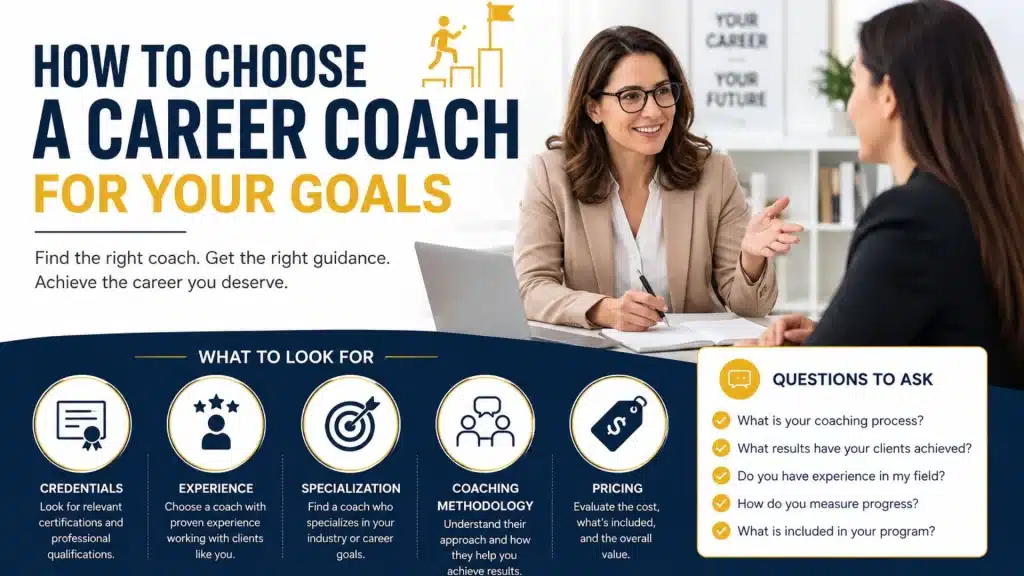
A career coach can help you clarify your goals, improve your job search strategy, and communicate your strengths more effectively. However, not every coach offers the same experience, services, or approach.
Knowing the questions to ask before hiring a career coach helps you evaluate your options before spending money. It also helps you understand whether a coach can address your specific challenges.
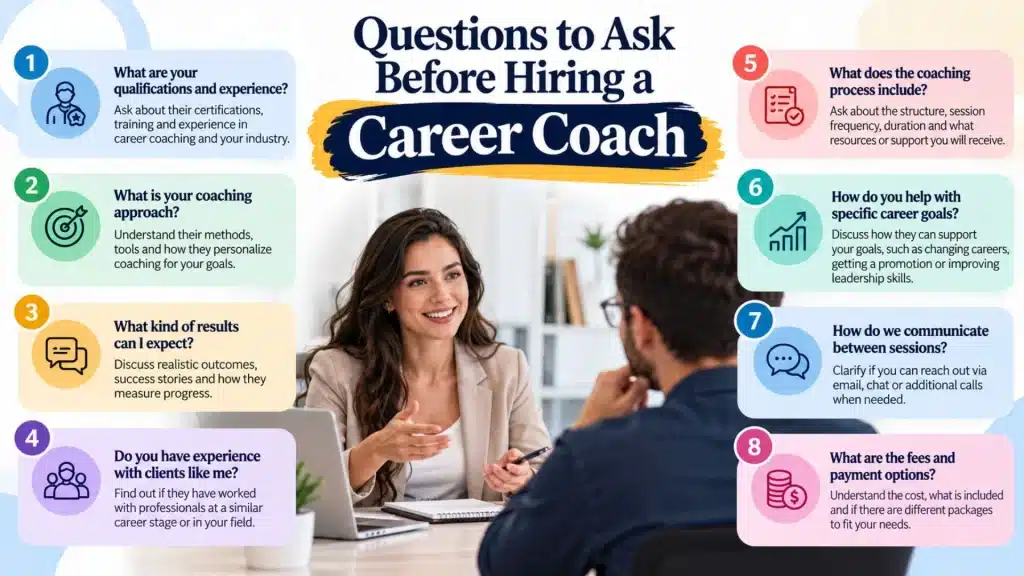
In this guide, we cover 12 important questions to ask, what to look for in the answers, and how to recognize potential red flags.
Why Should You Ask Questions Before Hiring a Career Coach?
Career coaching can offer structure and accountability during a job search or career transition. The value you receive depends on the coach’s experience, the quality of the guidance, and your own goals.
According to the International Coaching Federation’s 2025 Global Coaching Study, the estimated number of coaching practitioners worldwide reached 122,974. This figure covers the broader coaching profession rather than career coaches specifically, but it illustrates the range of providers available.
Before making a decision, look beyond testimonials and professional titles. Ask how a coach works, what services are included, and how the support relates to your career objectives.
12 Questions to Ask Before Hiring a Career Coach
1. What Career Goals Can You Help Me Achieve?
Start by explaining what you want to accomplish. Then ask which parts of your career challenge the coach is equipped to address.
Career coaching may cover:
- Finding a new job or changing industries
- Improving a resume and LinkedIn profile
- Preparing for interviews
- Pursuing a promotion or leadership position
- Developing networking and salary negotiation skills
A suitable coach should explain how their services align with your goals.
Example: If you have eight years of accounting experience and want to move into financial analysis, you may need help identifying transferable skills, evaluating target roles, and presenting your experience to employers.
Ask what the coaching process would involve and what realistic progress might look like.
2. What Experience Do You Have With Professionals Like Me?
Some career coaches specialize in recent graduates. Others work with mid-career professionals, executives, or people making major career transitions.
Ask whether the coach has worked with clients who face challenges similar to yours.
Useful follow-up questions include:
- Have you helped someone make a similar career change?
- What obstacles are common for professionals at my level?
- How would you approach my particular situation?
- Can you share an anonymized example of your process?
Relevant experience matters because career challenges differ. A recent graduate may need help presenting limited experience, while a senior manager may need to demonstrate strategic leadership and business impact.
3. What Qualifications or Professional Training Do You Have?
Credentials can help you evaluate a coach’s preparation, but they should not be the only deciding factor.
Ask about coaching education, professional certifications, relevant industry experience, and continuing development. Some coaches hold credentials from the International Coaching Federation (ICF). Others bring experience in recruiting, human resources, leadership, or talent development.
Ask how their qualifications relate to the services they provide. Career coaching is also different from licensed career counseling or mental health counseling. If you need specialized services, verify that the professional has the appropriate qualifications.
4. What Is Your Coaching Process?
Ask the coach to explain what happens after you begin working together.
A structured coaching process might include:
- Reviewing your skills, experience, and career goals.
- Identifying suitable roles and potential career paths.
- Developing your professional value proposition.
- Improving your resume, interview preparation, and networking strategy.
- Reviewing progress and adjusting the plan when necessary.
The process should have a clear purpose without being so rigid that it ignores your circumstances.
You can also review this guide to what to look for in career coaching services for additional considerations when comparing different approaches.
5. How Will We Measure Progress?
Career coaching should involve practical steps rather than motivational conversations alone.
Ask how you and the coach will evaluate progress. Possible measures include:
- Defining suitable target roles
- Improving your resume and LinkedIn profile
- Practicing interview answers
- Building a consistent networking routine
- Preparing for salary negotiations
- Making a more informed career decision
Not every outcome can be controlled. Employers decide whom to interview and hire, and the availability of jobs changes over time.
A responsible coach will distinguish between actions you can take and results that depend on external factors.
For example, if you have applied for dozens of jobs without receiving interviews, your first objective might be to review your resume, refine your professional positioning, and tailor applications more carefully.
6. What Services Are Included in the Fee?
Career coaching packages differ considerably. Some focus on career planning, while others include resume reviews, LinkedIn guidance, mock interviews, and ongoing advice.
Before agreeing to a package, ask what is included.
Clarify the number and length of sessions, access to the coach between meetings, document reviews, interview practice, and any additional charges.
If the service operates through a membership, ask whether the fee covers a fixed period and what happens when that period ends. Get the details in writing so you can compare providers fairly.
7. How Much Does Career Coaching Cost?
The cost of career coaching depends on the provider, experience, format, and scope of support. Some coaches charge by the hour, while others offer multi-session packages or subscriptions.
Instead of looking at price alone, compare the services you will actually receive.
Ask whether the fee includes follow-up support, document reviews, practice interviews, or access to additional resources. Also check the cancellation, refund, and renewal policies.
For example, a single consultation may be sufficient if you need feedback on one interview. A longer program might be more appropriate if you need help with career direction, professional branding, and an extended job search.
You can compare coaching services and membership terms before deciding whether a particular program fits your needs and budget.
Avoid making a financial commitment because of pressure or promises of guaranteed employment. A higher fee does not automatically mean better results.
8. Do You Understand the Hiring Manager’s Perspective?
If your main challenge is getting noticed by employers, ask whether the coach has experience in recruiting, hiring, or people management.
Someone familiar with hiring may help you understand how employers assess candidates, interpret accomplishments, and evaluate relevant skills. However, ask for specific examples rather than assuming that a particular job title guarantees expertise.
For instance, instead of writing, “Responsible for managing a sales team,” you could describe how you led eight representatives, improved follow-up procedures, and contributed to customer retention.
Only include results you can substantiate. The goal is to communicate your contribution clearly rather than exaggerate your achievements.
9. How Will You Tailor the Advice to My Situation?
Your career goals, financial responsibilities, experience, and personal circumstances are unique. Coaching advice should reflect those differences.
Ask how the coach will account for your current skills, target roles, location preferences, compensation needs, and willingness to retrain.
Example: A marketing specialist moving into product management may need to demonstrate project coordination, analytical thinking, and cross-functional communication. An experienced manager pursuing an executive role may need to show broader strategic and financial impact.
A personalized approach helps you focus on the skills and evidence most relevant to your next step.
10. How Long Will the Coaching Process Take?
There is no standard timeline for career coaching. You may need only a few sessions to prepare for an important interview. A career change or executive job search may require longer-term support.
Ask for a proposed timeline and the reasoning behind it. Find out how progress will be reviewed and what happens if your goals change.
Be cautious about promises that you will get hired within a certain number of days. A coach can help strengthen your preparation and strategy, but cannot control employer decisions or hiring schedules.
11. How Do You Handle Confidentiality and Feedback?
Career conversations can involve sensitive information about your salary, current employer, workplace frustrations, or future plans.
Ask how your information is stored and whether it will be shared with anyone else. If you are currently employed, discuss how to conduct your job search discreetly.
You should also understand how feedback is delivered. Useful feedback is specific, respectful, and actionable. For example, rather than simply saying your interview answers are weak, a coach should identify what is missing and suggest how to communicate your achievements more effectively.
12. Can I Review the Agreement Before Committing?
Before paying, review the service agreement, cancellation policy, payment terms, and any written description of the program.
Ask whether an introductory consultation is available and whether you will work directly with the person you meet.
A consultation gives you an opportunity to evaluate the coach’s communication style and determine whether you feel comfortable discussing your goals.
Avoid providers who pressure you to pay immediately, refuse to clarify fees, or promise guaranteed jobs and salary increases.
Red Flags to Watch for When Choosing a Career Coach
Even after asking the right questions, pay attention to how a coach responds.
Watch for these warning signs:
- Guaranteed job offers: No coach can control an employer’s hiring decision.
- Unclear services: The provider cannot explain the deliverables.
- Hidden fees: Pricing, renewal terms, or cancellation policies are difficult to understand.
- Unverifiable claims: Credentials or success stories cannot be substantiated.
- Generic advice: Your specific experience and goals receive little attention.
- High-pressure sales: You are pushed to pay before you understand the program.
Testimonials can provide useful context, but they should not replace your own assessment. Look for transparent communication, realistic expectations, and a clear explanation of the process.
How to Choose the Right Career Coach for Your Needs
After your consultation, compare your options using this checklist.
| Evaluation factor | What to look for |
| Relevant experience | Familiarity with your career stage and goals |
| Qualifications | Appropriate training and verifiable credentials |
| Coaching process | Clear steps tailored to your situation |
| Services | Defined deliverables and support |
| Pricing | Transparent fees and written terms |
| Communication | Honest answers and actionable feedback |
| Expectations | Realistic objectives without guarantees |
You do not need to choose the most expensive coach or the provider with the longest list of credentials. Choose someone whose experience and approach match the support you need.
Conclusion
Choosing a career coach is an important decision, and the right questions can help you make it with confidence.
Focus on relevant experience, a clear coaching process, transparent pricing, practical support, and realistic expectations. Take time to compare providers and review the terms before committing.
For professionals seeking structured guidance on career transitions, professional positioning, and communicating their value to employers, Job Change Now is one option to evaluate alongside other providers.
Ultimately, the best choice is the one that aligns with your goals, budget, and preferred way of working. Asking the right questions now can help you choose support that moves your career in the direction you want.
Frequently Asked Questions
What are the most important questions to ask before hiring a career coach?
Ask about experience, qualifications, coaching methods, services, pricing, and how progress will be assessed. You should also clarify confidentiality, cancellation terms, and whether the coach has worked with people facing similar career challenges.
How do I know if a career coach is worth the money?
A coach may be worth the investment if the services address a specific problem and provide practical guidance you can use. Evaluate the provider’s experience, the quality of the process, and the deliverables included. Avoid relying on guaranteed job offers or salary increases as proof of value.
Should I hire a certified career coach?
Certification can demonstrate formal coaching education and a commitment to professional standards. However, consider it alongside relevant experience, the services offered, and your needs. Verify what the credential represents before making a decision.
Can a career coach help me change industries?
Yes. A career coach can help you identify transferable skills, research potential roles, recognize skill gaps, and explain your experience to employers in a new field. Your results will depend on your qualifications, target roles, and employer requirements.
Also Read: Best LinkedIn Headlines That Get Recruiter Attention