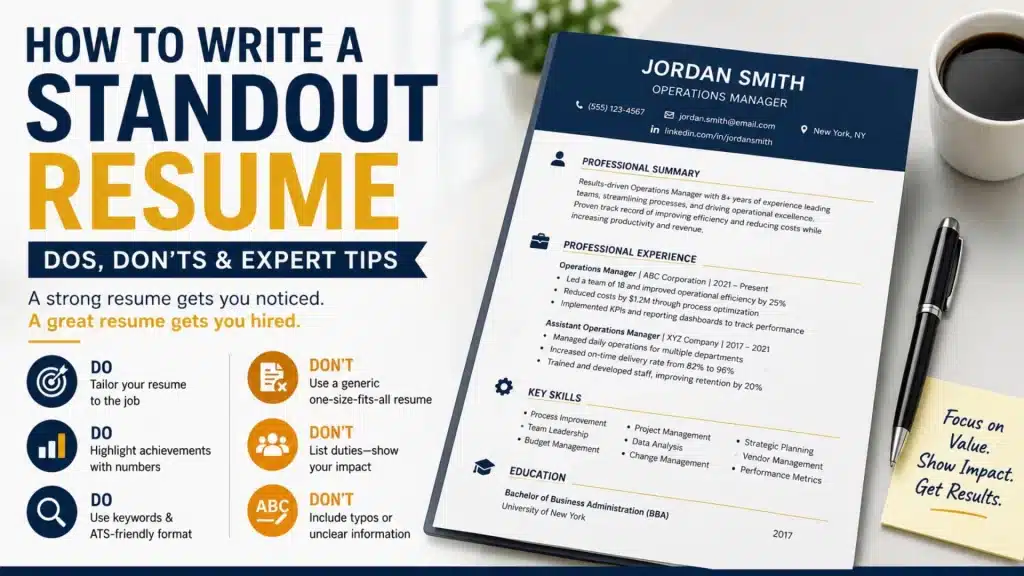

A strong resume does more than list where you’ve worked. It has to quickly get across what you can actually do, what value you bring, and why an employer should bother reading past the first paragraph.
That’s gotten harder lately. LinkedIn’s 2026 research found U.S. applicants per open role have roughly doubled since spring 2022, and nearly 65% of people said finding a job has genuinely gotten more difficult. At the same time, 93% of recruiters said they planned to lean further into AI tools throughout 2026.
Which means your resume is now doing double duty; it needs to be readable by an applicant tracking system (ATS), and genuinely compelling to the actual human who eventually reads it.
That’s really the whole point of resume optimization. It’s not just fixing typos or picking a nicer font. Done well, it’s about repositioning your experience around the roles you’re actually going after.
What Resume Optimization Actually Means?
At its core, it’s the process of improving a resume so it communicates your qualifications more clearly and lines up with what your target roles actually require.
That can include reviewing what you’ve already got, sharpening your professional summary, identifying the skills and keywords that genuinely matter, rewriting weak job descriptions into real accomplishments, improving how readable it is for an ATS, trimming out anything unnecessary, building a stronger value proposition, and making sure the whole thing reads consistently from top to bottom.
The goal was never to make your resume sound impressive for its own sake. It’s to make your actual qualifications easy to understand at a glance.
A hiring manager should be able to scan your resume and quickly land on three answers: what does this person actually do, what have they accomplished, and why does that matter for this specific role. If those three things are hard to find, even a genuinely strong candidate can get passed over without anyone meaning to overlook them.
Why Does This Matters So Much in 2026?
Hiring has gotten more competitive, plainly. LinkedIn reports U.S. applicants per open role have doubled since spring 2022, and 66% of recruiters say finding qualified talent has gotten harder even with more applicants in the pool. Recruiters are also leaning more heavily on AI tools to manage and screen candidates.
Which means your resume can’t just coast on job titles anymore. It needs to actually demonstrate your skills and results in language that connects to the role you’re chasing.
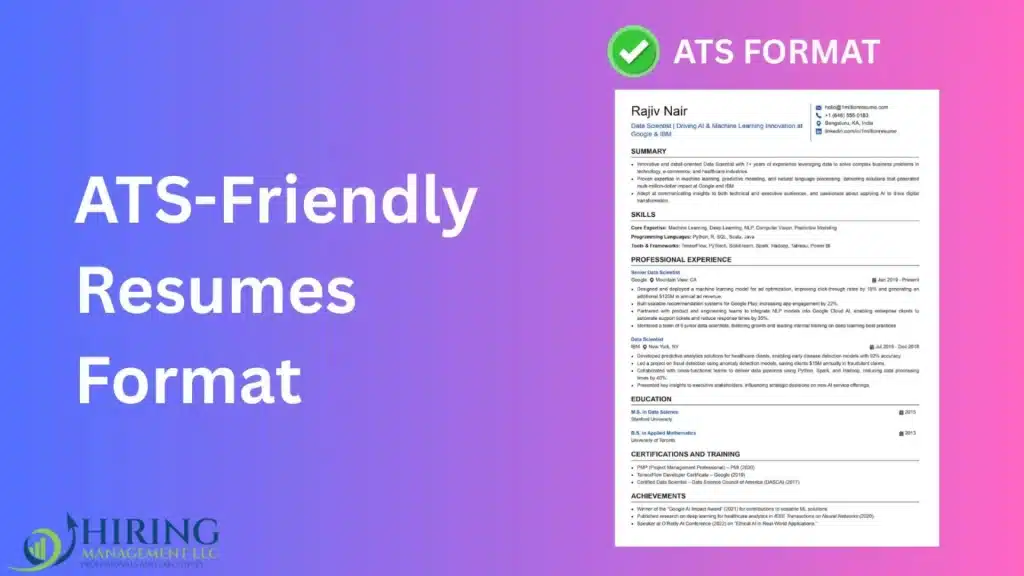
ATS technology is part of why this matters too. These systems help employers sort through applications and surface resumes with relevant skills, qualifications, and terminology. Indeed’s 2026 guidance recommends clean formatting, standard section headings, and relevant language for ATS-friendly resumes.
But there’s an important distinction here worth remembering: optimizing for an ATS doesn’t mean cramming your resume full of keywords. Repeating “project management” fifteen times doesn’t make you a better project manager, it just makes your resume harder to read.
Skip:
“Responsible for project management and working with different teams.”
Go with:
“Coordinated 12 cross-functional projects from planning through delivery while managing timelines, stakeholder communication, and project priorities.”
The second version actually gives an employer evidence, not just a claim.
What Actually Improves When You Optimize a Resume?
A genuinely good resume service looks well past spelling and layout. Here’s where the real impact usually happens.
Your Professional Summary
This is often one of the first things a recruiter actually reads, and a generic one wastes prime real estate.
Skip:
“Experienced professional seeking a challenging position where I can utilize my skills and grow with a successful organization.”
That sentence could describe literally anyone. Try instead:
“Operations leader with 12 years of experience improving workflow efficiency, managing cross-functional teams, and reducing operating costs across multi-location organizations.”
The second version establishes who you are, what you’ve done, and what you bring, all in one line.
Your Actual Accomplishments
One of the most common resume problems: confusing what you were assigned to do with what actually happened because you did it well.
Skip:
“Managed customer service team.”
Try:
“Led a 25-person customer service team and improved first-response times by 28% through workflow and scheduling changes.”
Wherever you genuinely can, lean on real numbers revenue, cost savings, percentage improvements, customer growth, productivity gains, team size, projects completed, time saved, process improvements, sales performance. Numbers just make accomplishments easier to actually grasp.
Getting the Formatting ATS-Friendly
A beautiful-looking resume isn’t automatically an effective one. If an ATS can’t actually parse the document, all that design work is quietly working against you.
Indeed recommends sticking with straightforward formatting and standard section headings, and steering clear of unnecessary graphics, charts, or photos that can trip up parsing software.
For most professional roles, a simple structure is the safer bet: name and contact info, professional summary, core skills, professional experience, education, certifications, and any other relevant info using familiar headings like “Professional Experience,” “Education,” and “Skills” rather than anything creative.
Try to avoid large graphics, text boxes, decorative icons, complex tables, heavy use of color, unusual fonts, or important information tucked inside an image where software can’t read it. Your resume should be equally easy for a person and a piece of software to make sense of.
Using Keywords Without Turning It Into a Word Salad
Keywords still matter, but context matters more than the keyword itself.
Start with the actual job description. Say the employer keeps repeating things like project planning, stakeholder management, risk management, budget management, cross-functional teams, agile, and Microsoft Project. If you genuinely have those skills, work them in naturally:
“Managed cross-functional Agile projects with budgets exceeding $2 million, coordinating stakeholders, timelines, risk mitigation, and project deliverables.”
That’s a lot stronger than tacking on a giant list of keywords with nothing behind them. And never claim a skill just because it happens to appear in the posting your skills need to match your actual experience, not the job description’s wish list.
Tailoring Your Resume to the Specific Job
One of the most common mistakes: sending the exact same resume to every employer, unchanged.
Your core resume can stay largely consistent but which parts get emphasized should shift depending on the role.
Say you’re a marketing manager applying to two different companies. One wants someone focused on digital acquisition. The other wants someone focused on brand strategy. Your underlying experience might be identical, but what you lead with should change.
For the first, you might lean into paid media, conversion optimization, customer acquisition, digital campaigns, and marketing analytics. For the second, you’d lean into brand positioning, market research, brand strategy, customer insights, and integrated campaigns.
That’s resume optimization. In practice you’re not rewriting your history, you’re just making the most relevant parts of it easier to spot.
Building an Actual Value Proposition Into the Resume
Your resume needs to answer a bigger question underneath everything else: why should this employer hire you specifically?
This is where a real value statement earns its place. There’s a meaningful difference between describing your career and actually communicating the value you bring. A value statement pulls together your professional identity, your strongest skills, your experience, and your results into one clear line.
Basic: “Marketing Manager with eight years of experience.”
Value-focused: “B2B marketing leader with eight years of experience developing demand-generation programs that improve qualified pipeline, customer acquisition, and campaign performance.“
The second version paints an actual picture of what you bring which matters even more when your job title doesn’t perfectly match the role you’re chasing next.
For Career Changers Specifically
Career changers run into a particular resume problem: they often have genuinely valuable experience, just not the exact job title the posting is looking for.
Take someone who’s taught for eight years and wants to move into corporate learning and development. A traditional resume might lean heavily on classroom instruction, lesson planning, and student assessment none of which immediately clicks for someone hiring a corporate trainer.
A better approach highlights what actually transfers:
“Designed and delivered training programs for diverse audiences, facilitated group learning sessions, and evaluated participant outcomes to improve learning effectiveness.”
The underlying experience hasn’t changed at all, only how it’s framed. This is exactly why optimization matters so much during a real career transition, and why it pairs well with broader guidance on connecting transferable skills to your next direction.
What Makes a Broader Approach Different?
A lot of resume services stop at producing a polished document and call it done.
A broader career-positioning approach goes further, helping you identify your actual value, strengthen your professional brand, and communicate that clearly to hiring managers, treating your resume as one piece of a larger strategy rather than an isolated file.
That distinction matters, because your resume really is only one part of the whole job search. You also need to know which roles to actually target, how to talk about your value out loud, how to approach recruiters, how to position yourself on LinkedIn, how to prepare for interviews, and how to negotiate once an offer’s on the table.
Job Change Now, for instance, bundles resume support with hiring-manager access, document review, and a broader set of career guidance resources which can offer a more complete picture than a standalone resume rewrite on its own.
Signs Your Resume Might Need Work
Worth considering resume optimization if you’re experiencing any of these:
- You’re applying frequently and getting very few interviews
- Recruiters rarely reach out
- Your resume reads like a list of duties, not accomplishments
- It hasn’t been updated in years
- You’re switching careers
- Your experience is genuinely hard to explain clearly on paper
- Your resume doesn’t line up with the roles you’re targeting now
- You’re going for more senior positions than before
- There’s a lot of outdated information cluttering it
- You’re not sure how to make it ATS-friendly
- Your LinkedIn and resume tell two different professional stories
Worth saying clearly: low response rates don’t automatically mean your resume is the whole problem. Your target roles, application strategy, networking, and interview performance all factor in too. But if your resume genuinely isn’t communicating your value clearly, it’s a sensible place to start looking.
Resume Writing vs. Resume Optimization
These get used interchangeably a lot, but there’s a real difference worth knowing.
Resume writing generally means creating something from scratch or rewriting it substantially. Resume optimization focuses more on improving how an existing resume performs against your actual goals and target roles reviewing what’s there, spotting weak or unclear sections, comparing your experience to what target roles actually require, sharpening keywords and terminology, strengthening how accomplishments are stated, clarifying your value, improving ATS readability, trimming irrelevant material, and tightening consistency throughout.
Which approach makes sense depends on where you’re starting. If you’ve got very little existing material, a full resume-writing service might make more sense. If you already have solid experience but your current resume just isn’t producing results, optimization is often the better starting point.
A Quick Self-Check Before Your Next Application
- Positioning: Is your target role obvious at a glance? Does your summary actually explain your value? Does the resume support the kind of role you want next?
- Experience: Have you focused on accomplishments rather than duties? Included measurable results where they genuinely exist? Are your strongest wins easy to find quickly?
- Keywords: Does the resume naturally reflect the important skills from the job description? Have you avoided just repeating them for the sake of it? Is every listed skill something you can actually back up?
- Formatting: Can an ATS parse it easily? Are the section headings clear and standard? Is the formatting consistent throughout? Is the most important information easy to scan quickly?
- Relevance: Have you cut anything that doesn’t support your target role? Is your experience ordered sensibly? Have you tailored the important sections for this specific opportunity?
What This Looks Like in Practice?
Take a sales manager applying for a regional sales director role. Their original resume says:
“Responsible for managing sales representatives and meeting company sales goals.”
That reads like a job posting, not an accomplishment. After optimization, it might become:
“Led a 14-person regional sales team across three states, increasing annual revenue by 19% through territory restructuring, account expansion, and performance coaching.”
Now an employer can actually see leadership, geographic scope, team size, revenue impact, strategic thinking, and real sales growth all in one sentence. The candidate didn’t invent new experiences. The resume just started communicating what was already there, a lot more effectively.
How This Fits Into the Bigger Picture?
A resume can get you in the door. It can’t carry the entire job search on its own.
Once your resume’s genuinely optimized, make sure your LinkedIn tells the same professional story. Your networking messages should communicate the same value. Your interview answers should reinforce the same strengths. And your conversations with recruiters should sound like the same career story, not a different one each time.
A broader career strategy connects value development, professional branding, recruiter conversations, interviews, and resume positioning into one coherent thread rather than treating each piece separately, hoping they somehow add up.
Making Your Resume Actually Work Harder
A resume was never supposed to just tell an employer where you’ve worked. It’s supposed to explain why any of that matters to them specifically.
That’s really the whole purpose behind resume optimization combining clear positioning, genuinely relevant keywords, measurable accomplishments, ATS-friendly formatting, and a real value proposition, all supporting the bigger story you’re telling through LinkedIn, networking, recruiter conversations, and interviews.
The current market makes this matter more than it used to. With applicants per role having roughly doubled since spring 2022 and recruiters leaning further into AI, candidates need to communicate their qualifications clearly and efficiently there’s just less room for a resume that makes someone work to understand your value.
If your resume isn’t getting the results you’d hoped for, it’s worth resisting the urge to just apply to more jobs and instead looking hard at the document itself. Does it actually show your value? Does it demonstrate real results? Does it line up with the roles you actually want? Can both a piece of software and an actual human understand it quickly?
If the honest answer is no in a few of these places, resume optimization can help turn what you’ve already done into a clearer, more persuasive story without you having to invent a single new accomplishment to tell it.
FAQ
What does resume optimization actually cover?
Improving a resume so it clearly shows your skills, accomplishments, and value, while lining up with the requirements of your target roles and staying ATS-friendly along the way.
Is it actually worth paying for?
It can be, especially when your resume isn’t producing interviews, you’re switching careers, you’re targeting more senior roles, or you’re struggling to explain your experience clearly on paper. The value comes from better positioning and relevance, not just a nicer-looking document.
How do I actually optimize for an ATS?
Simple formatting, standard section headings, and keywords pulled directly from the job description. Skip heavy graphics, charts, and unusual layouts. Most importantly, make sure the keywords genuinely reflect real experience you have.
Should every application use the same resume?
Not exactly. Your core resume can stay consistent, but tailoring the summary, skills, and highlighted accomplishments to each specific role tends to make a real difference.
Can this actually help someone changing careers?
Yes, a solid optimization pass can surface transferable skills and reframe past experience in language that connects clearly to the new direction, so the hiring manager doesn’t have to guess at the connection themselves.
Also Read: How to Negotiate Salary