You can have the right degree, technical knowledge, and years of experience and still struggle to get hired or move ahead at work. Why? Because employers look at more than what you know. They also pay attention to how you communicate, solve problems, work with others, handle change, and respond to difficult situations.
So, what are soft skills?
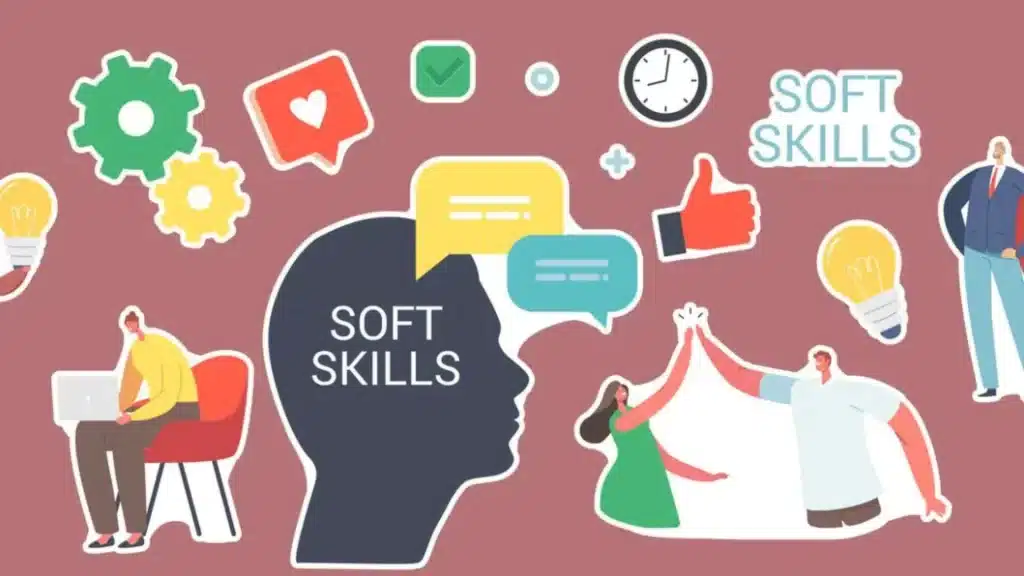
Soft skills are personal and interpersonal skills that enable you to work well with others and to deal with situations in the workplace. These include communication, teamwork, adaptability, leadership, problem solving, emotional intelligence, time management and other behaviors that affect how you do on the job.
These skills are relevant in almost every industry. According to the U.S. Bureau of Labor Statistics (BLS), as of October 2023, the top skills in all occupations include adaptability, attention to detail, and interpersonal skills. Some of the top skills for management occupations are adaptability, leadership and problem solving and decision making.
Understanding soft skills can help you become a stronger employee, improve your resume, prepare for interviews, and communicate your value more clearly to employers.
What Are Soft Skills?
Soft skills are nontechnical abilities that affect how you interact with people, handle work, communicate ideas, and respond to challenges.
Unlike technical skills, which are usually tied to a specific job or industry, soft skills can transfer from one role to another.
For example, a software developer may need technical knowledge of a programming language. But they also have to work with project managers, explain technical issues to non-technical coworkers, meet deadlines and resolve conflicts.
Those are soft skills.
What does soft skills mean in simple terms?
If you are wondering what does soft skills mean, think of it this way:
Soft skills are the personal behaviors and people skills that help you work effectively with others and handle workplace challenges.
They answer questions such as:
- Can you communicate clearly?
- Can you listen to other people?
- Can you work well on a team?
- Can you manage your time?
- Can you solve problems?
- Can you adapt when plans change?
- Can you lead others?
- Can you handle feedback professionally?
- Can you stay organized under pressure?
These abilities can be important whether you are applying for an entry-level position or preparing for an executive role.
Why Are Soft Skills Important in the Workplace?
Soft skills are not simply resume buzzwords. They are connected to real workplace requirements.
The BLS Occupational Requirements Survey reports that in 2025, 60.8% of workers required more than basic people skills. BLS defines people skills around the ability to listen, communicate, and relate to others.
BLS also identifies speaking and listening as important skills across many occupations. Its current occupational data evaluates these skills across detailed occupations and employment projections for 2025–35.
This makes sense in everyday work.
Imagine two employees with identical technical abilities.
Employee A completes assignments accurately but rarely communicates problems, struggles with feedback, and becomes frustrated when priorities change.
Employee B has similar technical knowledge but communicates early, listens carefully, works well with teammates, and adjusts when priorities shift.
Technical ability matters for both employees. But their soft skills can affect collaboration, leadership potential, customer relationships, and career growth.
What Are Important Soft Skills?
There is no single list that applies equally to every job. The most useful soft skills depend on the position, industry, level of responsibility, and workplace.
However, several soft skills are valuable across many careers.
1. Communication
Communication is one of the most important workplace skills.
It includes:
- Verbal communication
- Written communication
- Active listening
- Presentation skills
- Asking useful questions
- Explaining complex ideas clearly
- Adapting your message to different audiences
Good communication skills does not mean talking constantly. It means making sure information is understood.
For example, a project manager may need to explain a technical issue to engineers and then communicate the same issue to a senior executive in simpler business terms.
2. Teamwork
Most modern workplaces require some level of collaboration.
Teamwork involves:
- Sharing information
- Supporting colleagues
- Respecting different perspectives
- Managing disagreements
- Accepting responsibility
- Contributing toward a shared goal
A strong team member understands that individual performance and team performance are often connected.
3. Adaptability
Workplaces change constantly. Companies introduce new software. Teams restructure. Customers change their expectations. Job responsibilities evolve. Adaptability is the ability to respond constructively when circumstances change.
This is especially important in today’s job market. Current BLS projections identify adaptability as the highest-ranked skill across all occupations in its 2025–35 national employment matrix.
A practical example would be an employee who learns a new project management platform instead of resisting the change simply because the previous system was familiar.
4. Problem-Solving
Employers do not only need people who can identify problems. They need people who can work toward solutions.
Problem-solving involves:
- Identifying the problem
- Understanding the cause
- Considering possible solutions
- Evaluating the options
- Taking action
- Reviewing the result
For managers, problem-solving becomes even more important because decisions can affect employees, budgets, customers, and business results.
5. Emotional Intelligence
Emotional intelligence involves recognizing and managing your own emotions while understanding how other people may be feeling.
At work, this can help you:
- Handle disagreements
- Receive criticism
- Understand colleagues
- Respond calmly under pressure
- Build stronger relationships
- Manage difficult conversations
Emotional intelligence does not mean avoiding difficult conversations. It means handling them thoughtfully.
6. Leadership
Leadership is not limited to people with “manager” in their job title. You can demonstrate leadership by:
- Taking ownership
- Helping teammates
- Making responsible decisions
- Guiding projects
- Solving problems
- Communicating a clear direction
- Supporting others during difficult situations
BLS data currently lists leadership among the top three skills for management occupations.
7. Time Management
Being busy does not necessarily mean being productive. Time management means understanding priorities and using your available time effectively.
Examples include:
- Setting realistic deadlines
- Prioritizing urgent work
- Breaking large projects into smaller tasks
- Avoiding unnecessary distractions
- Communicating when deadlines are unrealistic
8. Critical Thinking
Critical thinking means examining information carefully before making a decision.
Instead of automatically accepting the first answer, you ask:
- What evidence supports this?
- What information is missing?
- Are there other explanations?
- What could happen if we choose this option?
This skill is particularly valuable in management, finance, healthcare, technology, marketing, and other fields where decisions have meaningful consequences.
What Are Soft Skills on a Resume?
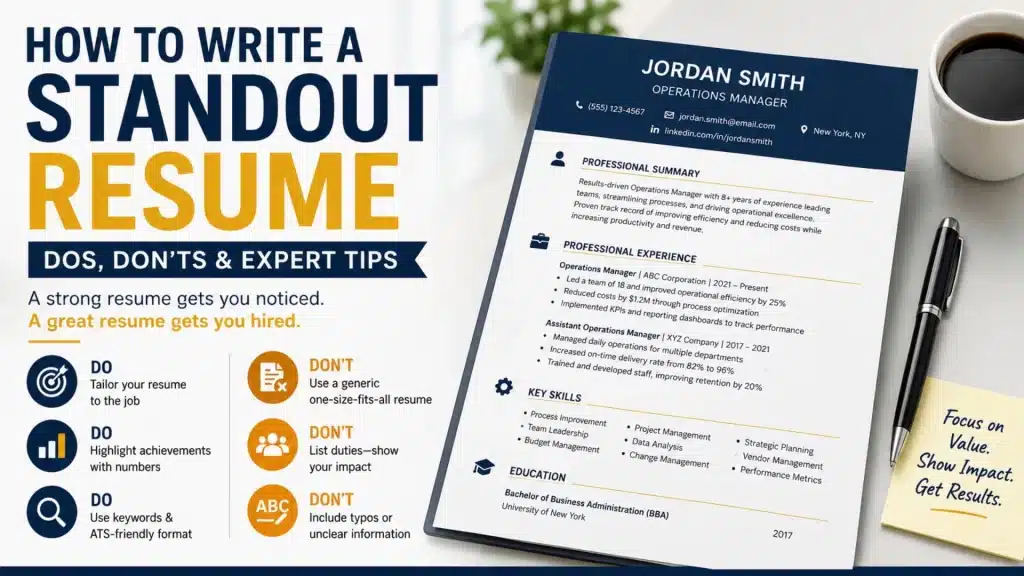
One of the most common questions job seekers ask is what are soft skills on a resume? On a resume, soft skills are personal and interpersonal abilities that demonstrate how you work.
Examples include:
- Communication
- Leadership
- Teamwork
- Adaptability
- Problem-solving
- Critical thinking
- Time management
- Collaboration
- Conflict resolution
- Emotional intelligence
- Decision-making
- Organization
- Active listening
However, simply creating a long list of soft skills is usually not enough. Instead, demonstrate them through your accomplishments.
For example:
Weak:
Excellent communication and leadership skills.
Stronger:
Led a cross-functional team of eight employees and improved project completion time by 20%.
The second example gives the employer evidence. It shows leadership while also demonstrating a measurable result.
This approach also works well with a strong professional value statement. Job Change Now explains how a value statement can communicate your strongest skills, experience, and results across your resume, LinkedIn profile, and interviews.
What Are Some Soft Skills to Put on a Resume?
If you are wondering what are some soft skills to put on a resume, start with the skills that are genuinely relevant to the job description.
For example:
For a customer service position
- Communication
- Active listening
- Empathy
- Conflict resolution
- Patience
- Problem-solving
For a management position
- Leadership
- Decision-making
- Delegation
- Communication
- Strategic thinking
- Conflict resolution
For a project management position
- Organization
- Communication
- Time management
- Collaboration
- Problem-solving
- Adaptability
For a sales position
- Communication
- Relationship building
- Negotiation
- Active listening
- Persuasion
- Resilience
For an entry-level position
- Teamwork
- Communication
- Organization
- Adaptability
- Reliability
- Willingness to learn
The key is relevance. Do not add 15 soft skills just because they sound impressive. Choose skills that you can demonstrate through your experience.
For more guidance, see Job Change Now’s guide to ATS-friendly resume tips, which explains how to make your resume clear and relevant while naturally reflecting the language employers use.
How to Show Soft Skills Instead of Just Listing Them?
A powerful way to demonstrate soft skills is through the action + skill + result approach.
For example:
Instead of:
Strong teamwork skills.
Write:
Collaborated with sales and marketing teams to launch a new campaign that generated 25% more qualified leads.
Instead of:
Excellent problem-solving skills.
Write:
Identified a recurring customer-service issue and redesigned the response process, reducing average resolution time by 30%.
Instead of:
Strong leadership skills.
Write:
Managed a team of 12 employees and introduced weekly performance reviews that improved project completion rates.
These examples give context. They tell the employer what you did, how you applied the skill, and what happened afterward.
How Soft Skills Affect Interviews?
Soft skills become particularly visible during job interviews. An employer may not directly ask, “Are you a good communicator?”
Instead, they may ask:
“Tell me about a time you disagreed with a coworker.”
Or:
“Describe a situation where you had to adapt quickly.”
Or:
“Tell me about a difficult problem you solved.”
These behavioral questions are opportunities to demonstrate soft skills through real experiences.
Use the STAR method:
- Situation: Explain the context.
- Task: Describe your responsibility.
- Action: Explain what you did.
- Result: Describe what happened.
For example:
“Our project deadline was moved forward by two weeks. I reorganized the team’s priorities, clarified responsibilities, and created daily progress checks. We completed the project before the revised deadline without increasing the budget.”
That answer demonstrates adaptability, leadership, organization, communication, and problem-solving without simply naming those skills.
How to Improve Your Soft Skills?
Soft skills can be developed through deliberate practice. Start with one or two areas rather than trying to improve everything at once.
Try these practical exercises:
Improve communication:Before sending an important message, ask whether the main point is clear within the first few sentences.
Improve listening:During conversations, avoid preparing your response while the other person is talking. Focus on understanding first.
Improve adaptability:When a process changes, identify what you can control and learn the new process instead of focusing only on what changed.
Improve leadership:Volunteer to coordinate a small project or help a teammate solve a problem.
Improve problem-solving:When something goes wrong, spend time identifying the root cause before jumping to a solution.
Improve time management:At the beginning of each workday, identify the two or three tasks that would have the greatest impact.
Small improvements can become valuable career habits over time.
How Job Change Now Can Help You Communicate Your Soft Skills?
Knowing your soft skills is only one part of career development. You also need to communicate with them effectively.
That is where Job Change Now can be useful for professionals who are preparing for a job change, promotion, career transition, or leadership opportunity.
Job Change Now focuses on helping professionals identify their professional value and communicate it through resumes, interviews, LinkedIn, and career conversations. Its career advisory approach includes hiring-manager perspective and support around professional positioning.
For example, a professional might know that they are good at leadership but struggle to explain what that leadership actually produced.
Instead of simply writing “strong leadership skills,” the goal is to identify evidence:
- How many people did you lead?
- What problem did you solve?
- What changed because of your leadership?
- Did you improve revenue, efficiency, retention, quality, or customer satisfaction?
- How did you handle a difficult situation?
That makes your soft skills more credible.
If you are preparing for a career transition, you can also explore Job Change Now’s resources on career coaching and career transitions and professional development coaching.
How to Identify Your Strongest Soft Skills?
Not sure which soft skills you actually have? Look at your past experiences.
Ask yourself:
- What problems do coworkers usually ask me to solve?
- What responsibilities have managers trusted me with?
- When have I helped a team succeed?
- When have I handled a difficult customer or colleague?
- What feedback do I regularly receive?
- Which projects produced measurable results?
- When have I adapted successfully to change?
Your answers can reveal your strongest skills. You can also review several job descriptions for your target position. Look for soft skills that appear repeatedly.
Then compare those requirements with your actual experience. That gives you a much more useful list than copying generic skills from a resume template.
Conclusion
So, what are soft skills?
They are the personal and interpersonal abilities that influence how effectively you communicate, collaborate, solve problems, adapt, lead, and handle workplace situations.
They matter because employers need more than technical knowledge. Current BLS data shows the importance of skills such as adaptability, interpersonal ability, leadership, problem-solving, speaking, and listening across the U.S. workforce. The most important step is not simply adding soft skills to your resume.
Show them.
Instead of saying you are a strong communicator, explain how your communication produced a result. Instead of saying you are a leader, demonstrate the people or projects you led. Instead of saying you are adaptable, explain how you handled a major change.
Your soft skills become much more powerful when they are connected to real experiences and measurable outcomes.
Start by identifying three soft skills that match your target role. Find examples from your career that prove each one. Then use those examples across your resume, LinkedIn profile, and interview answers.
That is how soft skills move from a list of keywords to evidence of the value you can bring to an employer.
Frequently Asked Questions
What are soft skills in simple words?
Soft skills are personal and interpersonal abilities that affect how you communicate, collaborate, solve problems, manage your time, adapt to change, and work with other people.
What are the most important soft skills for a job?
Commonly valuable soft skills include communication, teamwork, adaptability, problem-solving, critical thinking, leadership, emotional intelligence, organization, and time management. The most relevant skills depend on the job and employer.
What are some soft skills to put on a resume?
Examples include communication, teamwork, leadership, adaptability, problem-solving, critical thinking, organization, time management, conflict resolution, and active listening. Choose skills that match the position and support them with real examples.
What are soft skills on a resume compared with hard skills?
Soft skills describe how you work and interact with others. Hard skills describe specific technical abilities or knowledge. For example, SEO is a hard skill while communication and problem-solving are soft skills.
Also Read: How to Negotiate Salary